Oppositional Defiant Disorder Assessment Handout

[First published on Nathen’s Miraculous Escape]

The most useful assessment tool is the DSM-IV-TR Diagnostic Criteria:

A. A pattern of negativistic, hostile, and defiant behavior lasting at least 6 months, during which four (or more) of the following are present:

(1) often loses temper

(2) often argues with adults

(3) often actively defies or refuses to comply with adults’ requests or rules

(4) often deliberately annoys people

(5) often blames others for his or her mistakes or misbehavior

(6) is often touchy or easily annoyed by others

(7) is often angry or resentful

(8) is often spiteful or vindictive

Note: Consider a criterion met only if the behavior occurs more frequently than is typically observed in individuals of comparable age and developmental level.

B. The disturbance in behavior causes clinically significant impairment in social, academic, or occupational functioning.

C. The behaviors do not occur exclusively during the course of a Psychotic or Mood Disorder.D. Criteria are not met for Conduct Disorder, and, if the individual is age 18 or older, criteria are not met for Antisocial Personality Disorder.


There are also several assessment tools, which have varying degrees of consistency with clinical-interview-derived diagnoses, test-retest reliability, and source-variance problems. They also cost a lot. What you basically need to know about them is that using these rating scales, teacher and parent opinions about ODD barely agree, and if their agreement was necessary, ODD would be about .2% of the population, down from up to 16%, according to the DSM. Parents’ opinions tend to be more closely related to clinicians’ and are probably more accurate. Note that the DSM does not require ODD to be present in more than one context, but consider your stance on this. If teacher says ODD and parents say no ODD, or vice versa, will you make the diagnosis?

Here are a list of common assessment tools, so that you can recognize them: Diagnostic Interview Schedule for Children, Child Behavior Checklist, Behavior Assessment System for Children: Second Edition, Disruptive Behavior Disorders Structured Parent Interview, Burke’s Behavioral Rating Scale, IOWA Conners Teacher Rating Scale, Disruptive Behavior Rating Scale, Oppositional Defiant Disorder Rating Scale, SNAP-IV Teacher and Parent Rating Scale. I did a fair bit of research on the use of these systems for ODD. If you’re interested, see my summary here.

Considerations for making a systemic diagnosis: I have my doubts that this diagnosis can be made in good faith by a system thinker; it pathologizes an individual child for a condition that is very likely contextual in nature. However, it is medicated less than many of its alternatives, such as ADHD, CD, and RAD, and its treatment goals are inherently relational, so a case can be made to use this diagnosis to funnel resources to families in need. In making a systemic diagnosis, remember that ODD is correlated with disrupted attachment, parenting that is authoritative, neglectful, or abusive, parental psychopathology (especially maternal depression), and marital discord.

Some books which might be helpful: Books for Parents: Your Defiant Child, Russell A. Barkley, PhD, Guilford Press, 1998; The Explosive Child, Ross Greene, PhD, Harper Paperbacks, 2001; Raising Your Spirited Child, Mary Sheedy Kurcinka, Harper Paperbacks, 1998; The Angry Child, Timothy Murphy, PhD, Three Rivers Press, 2002; How to Behave So Your Child Will Too, Sal Severe, PhD, Penguin Books, 2003; It’s Nobody’s Fault, Harold Koplewicz, MD, Three Rivers Press, 1997; Books for Children: The Behavior Survival Guide for Kids, Thomas McIntyre, Free Spirit, 2003; How to Take the Grrrr Out of Anger, Elizabeth Verdick and Marjorie Lisovskis, Free Spirit, 2002; Josh’s Smiley Faces: A Story About Anger, Gina Ditta-Donahue, Magination Press, 2003; Learning to Listen, Learning to Care, Lawrence Shapiro, Instant Help Publications, 2004; Books for Professionals: What Works for Whom: A Critical Review of Psychotherapy Research, Anthony Ross and Peter Fonagy, Guilford Press, 2004; Helping Children with Aggression and Conduct Problems: Best Practices for Intervention, Michael Bloomquist and Steven V. Schnell, Guilford Press, 2005

Diagnostic Criteria for Oppositional Defiant Disorder

According to the fourth edition of the Diagnostic and Statistical Manual of Mental Disorders, Text Revision (DSM-IV-TR), there is a mental disorder that is usually diagnosed in childhood or adolescence called Oppositional Defiant Disorder. It afflicts somewhere between 2-16% of people, more boys than girls before puberty, but equal numbers of boys and girls after puberty. Family therapists are not into giving medical-model diagnoses in general, but in many cases, a DSM diagnosis is the only way for a family to get their insurance companies to pay for them to get help. In one of my internship sites, for example, I will need to provide a DSM diagnosis after the first session with a family in order to get the clinic paid for our work. As I understand it, this is a common diagnosis for kids who are giving their parents and teachers a hard time.

Note that the word “often” is used to mean something like “more than usual,” so whichever kids who are most like this will qualify for this Disorder, as long as someone important believes that their behavior is significantly impairing their social or academic functioning. Note also that these symptoms could be occurring in just one setting (say, just at school) and the kid will still qualify for ODD, unlike the symptoms for ADHD, which have to occur in at least two settings to qualify for the diagnosis.

Outside of family therapy, ODD is very commonly treated with Ritalin for “comorbid” ADHD. Kids diagnosed with ODD are also fairly commonly given antidepressant and/or antipsychotic medication, on the guess that they have an underlying Mood Disorder or Bipolar Disorder, though there is little to no research on these medications for children, especially in combination.

The following is word-for-word from the DSM-IV-TR, page 102:

Diagnosis criteria for 313.81 Oppositional Defiant Disorder

A. A pattern of negativistic, hostile, and defiant behavior lasting at least 6 months, during which four (or more) of the following are present:

(1) often loses temper

(2) often argues with adults

(3) often actively defies or refuses to comply with adults’ requests or rules

(4) often deliberately annoys people

(5) often blames others for his or her mistakes or misbehavior

(6) is often touchy or easily annoyed by others

(7) is often angry or resentful

(8) is often spiteful or vindictive

Note: Consider a criterion met only if the behavior occurs more frequently than is typically observed in individuals of comparable age and developmental level.

B. The disturbance in behavior causes clinically significant impairment in social, academic, or occupational functioning.

C. The behaviors do not occur exclusively during the course of a Psychotic or Mood Disorder.

D. Criteria are not met for Conduct Disorder, and, if the individual is age 18 or older, criteria are not met for Antisocial Personality Disorder.

[First published on Nathen’s Miraculous Escape, May 14, 2010.]

Oppositional Defiant Disorder Assessment

[First published on Nathen’s Miraculous Escape]

Oppositional Defiant Disorder is a commonly diagnosed mental disorder in school-aged children, occurring in between 2% to 16% of the population, according to the DSM-IV-TR(American Psychiatric Association [DSM-IV-TR], 2000), though actual prevalence rates may be much lower, as will be discussed below. It is characterized by defiant behavior which causes social or academic impairment. It is treated largely with cognitive-behavioral therapy and/or family therapy and sometimes medication, though there is no evidence to support the use of medication for Oppositional Defiant Disorder (WebMD, 2011; Mayo Clinic, 2011).

Diagnostic Criteria and Indicators

DSM-IV-TR Diagnostic Criteria. Oppositional Defiant Disorder is currently diagnosed using criteria from the Diagnostic and Statistical Manual of Mental Disorders IVTR (DSM-IV-TR, 2000, p. 102):

A. A pattern of negativistic, hostile, and defiant behavior lasting at least 6 months, during which four (or more) of the following are present:

(1) often loses temper

(2) often argues with adults

(3) often actively defies or refuses to comply with adults’ requests or rules

(4) often deliberately annoys people

(5) often blames others for his or her mistakes or misbehavior

(6) is often touchy or easily annoyed by others

(7) is often angry or resentful

(8) is often spiteful or vindictive

Note: Consider a criterion met only if the behavior occurs more frequently than is typically observed in individuals of comparable age and developmental level.

B. The disturbance in behavior causes clinically significant impairment in social, academic, or occupational functioning.

C. The behaviors do not occur exclusively during the course of a Psychotic or Mood Disorder.

D. Criteria are not met for Conduct Disorder, and, if the individual is age 18 or older, criteria are not met for Antisocial Personality Disorder.

Other indicators. According to the DSM-IV-TR (2000), Oppositional Defiant Disorder is correlated with emotional reactivity, hyperactivity, and difficulty in soothing before starting school, and with very high or low self-esteem, emotionality, conflict with others, ADHD, and learning disorders during school years. There are also correlations with disrupted attachment, authoritarian parenting, child-neglect, maternal depression and parental discord. (As an aside, I would love to see a factor analysis of these correlations. My guess is that the indicators that are child–specific would end up not predicting much or anything once family-specific indicators were factored in.)

Differential diagnosis. The DSM-IV-TR (2000) suggests differentiating Oppositional Defiant Disorder from nine other behavior classifications: Conduct Disorder can be ruled out by the lack of violence, cruelty, stealing, or lying. Antisocial Personality Disorder is primarily ruled out by not meeting the age criterion of 18 years. Mood Disorders and Psychotic Disorders need to be ruled out using the DSM-IV-TR criteria for the various Mood and Psychotic Disorders; the general inference can be made, however, that a condition is not Oppositional Defiant Disorder if it only occurs during periods of abnormally high or low mood, or during periods in which the child’s reality-testing capacity is abnormally low. Attention-Deficit Disorders can occur “comorbidly” with Oppositional Defiant Disorder; if a child’s problematic behavior qualifies him or her for both illnesses, “both diagnoses should be made” (p. 102). Mental Retardation can also be diagnosed comorbidly, but only if a child’s defiance is more intense than average for their degree of mental impairment. “Average” and “appropriate” in this case, and all cases in these diagnostic criteria, are apparently left to the diagnostician to determine. For another example, the DSM-IV-TR suggests ruling out developmentally appropriate defiance, but leaves the definition of such up to the diagnostician. It is also inferred that “developmentally appropriate” is to be in consideration of the child’s age-cohort, not to that child and their circumstances in particular, or to that child’s experiential cohort, e.g. children experiencing severe marital discord, neglect, abuse, and so on. Finally, problems with language comprehension, such as hearing loss, should be ruled out, as they can produce defiant-seeming behavior.

Assessment Tools

Diagnostic Interview Schedule for Children. According to Galanter and Jensen (2009), parts of this interview can be helpful assessing for the ways and extent to which oppositional behaviors are a problem. This assessment tool is intended to produce information strictly in line with the DSM-IV-TR diagnostic criteria. For example, it checks on the 6-month duration requirement for each behavior, not just for the duration of oppositional behavior in general (Shaffer, Fisher, Lucas, Dulcan, & Schwab-Stone, 2000), which may produce a more conservative diagnosis than other assessment tools. Also, it is designed to be easy to administer, without extensive training (Shaffer et al., 2000). The test-retest reliability of this tool is adequate for information from parents, but very low for information from children (Shaffer et al., 2000), meaning for children, the same set of questions administered at different times will yield different diagnoses about 80% of the time, where for parents it is only about 30% of the time.

Child Behavior Checklist (CBCL)The Child Behavior Checklist is a 4-page pencil-and-paper form, with two pages of general information about the child and two pages of 3-point behavior ratings. It is a broad behavioral rating scale that includes questions about oppositional behavior (O’Laughlin et al., 2010). It is described as easy to complete and as reliably discriminating ADHD children with and without Oppositional Defiant Disorder (Biederman, Ball, Monuteaux, Kaiser, & Faraone, 2008). The CBCL has also been criticized as not asking questions consistent with DSM-IV-TR diagnostic criteria for Oppositional Defiant Disorder (O’Laughlin, Hackenburg, & Riccardi, 2010).

Behavior Assessment System for Children: Second Edition (BASC-2). The BASC-2 is another broad behavior assessment which contains items related to oppositional behavior in children and has been found to have both high internal consistency and test-retest reliability, though it also does not contain questions that are specific to DSM-IV-TR diagnostic criteria for Oppositional Defiant Disorder (O’Laughlin et al., 2010). It has a form for teachers (139 questions) and for parents (160 questions), each with a 4-point Likert scale answer from “never” to “almost always” (O’Laughlin, 2010).

Disruptive Behavior Disorders Structured Parent Interview (DBDSPI). The DBDSPI is a semi-structured interview for clinicians to administer to parents using questions with 4-point Likert scale answers, from “not a problem” to “severe problem” (Pelham, Gnagy, Greensledge, & Milich, (1992). This interview has a section specifically for Oppositional Defiant Disorder, produces data that can reliably distinguish children with and without Oppositional Defiant Disorder diagnoses, and does so across different settings, such as school and home (O’Laughlin et al., 2010).

Burke’s Behavioral Rating Scale (BBRS).This scale is listed by some sources as commonly used to assess for Oppositional Defiant Disorder, but there is apparently no research on its psychometrics for that disorder.

IOWA Conners Teacher Rating Scale (Loney & Milich, 1982) tested in Volpe, Briesch, & Gadow, 2011 is a behavior-rating scale commonly used to distinguish ADHD from ODD and includes two 5-item scales. The more time raters are required to use in rating systems, the less reliable the resulting data is. Also, it should be kept in mind that the IOWA is a better tool for using parent and teacher observations to rule out ODD than to diagnose it (Waschbusch & Willoughby, 2008). Widely used to measure oppositional-defiant behaviors.

Disruptive Behavior Rating Scale (DBRS): There is evidence that the DBRS is “adequate” for use with preschoolers (Pelletier, Collett, Gimpel, & Crowley, 2006). For the teacher version, not the parents, yet—no data yet. This may be a problem, because in a study of 1,785 school-age children, () found that there was more source variance than trait variance for oppositional behaviors in the DBRS for mothers and teachers (but not fathers) (Servera, Lorenzo-Seva, Cardo, Rodriquez-Fornells, & Burns, 2010), indicating that in many cases, these behaviors or the perception of these behaviors are relationship specific.

Oppositional Defiant Disorder Rating Scale (ODDRS): The ODDRS is an eight-item, four-point Likert rating scale designed gather data for possible Oppositional Defiant Disorder by parents and teachers. Initial research on this tool was promising, but more thorough research found that while teachers’ data was reliable, and parents’ data was reliable, the data from teachers and parents barely correlated at all. Additionally, teacher ratings did not correlate with actual diagnoses of Oppositional Defiant Disorder in the study population (O’Laughlin, Hackenburg, and Riccardi, 2010).

SNAP-IV Teacher and Parent Rating Scale. The SNAP-IV is a Likert-scale, checklist-based assessment tool that has an eight item subsection for identifying Oppositional Defiant Disorder based on the DSM-IV-TR diagnostic criteria for that disorder (Munkvold, Lundervold, Lie, & Manger, 2009). Research using this rating scale also shows a source-variance problem, to the point that some researchers have suggested that perhaps there should either be two kinds of Oppositional Defiant Disorder, one for parents and one for teachers, or that Oppositional Defiant Disorder is not a true mental disorder (Munkvold et al., 2009). In one study of 7,007 children using the SNAP-IV, parents identified 1.4% as having Oppositional Defiant Disorder and teachers identified 1.3% as having Oppositional Defiant Disorder (Munkvold et al., 2009). This is below the low end of the scale the DSM-IV-TR suggests of prevalence in the general population of 2-16% (2000), but the sets of students identified by parents and teachers onlyoverlapped in .2% of cases (Munkvold et al., 2009). That is, if we only considered a child as having Oppositional Defiant Disorder if their oppositional behavior was not context specific, this disorder would hardly exist.

Making a Systemic Diagnosis of Oppositional Defiant Disorder

I have no clinical experience with this disorder, so I am taking my current opinion with a grain of salt, but reading the research on Oppositional Defiant Disorder has been somewhat troubling in terms of making a systemic diagnosis. I understand that this diagnosis can be a way to funnel resources to families and children in need of them, and that this diagnosis is less pejorative than some alternatives, such as Reactive Attachment Disorder or Conduct Disorder, but I have a few concerns. The strongest predictors of the disorder seem to be relational: whether it is a parent or a teacher judging the behavior, disrupted attachment, negative or abusive parenting, maternal depression, and marital discord. It seems ethically shaky to diagnose a child when that child’s behavior is probably an understandable result of their environment. Also, the diagnosis of a mental disorder means ostensibly that the child has an organic brain disorder, which invites the use of drug treatment, even though there is widespread agreement in all the literature that I read that there is no evidence to support the use of drugs to treat Oppositional Defiant Disorder.

So, my opinion about making a systemic diagnosis of Oppositional Defiant Disorder is that I am not sure that one can. For situations in which it seems that it is the least-bad option, it will be important to see the whole family, or at least the parents of the identified patient, to assess family dynamics. Is there serious marital discord? Evidence of disrupted attachment? Any behavioral vicious cycles? Neglect? Abuse? Trauma? Parental psychopathology? Learning disorders? Bad teachers?

I would tend to use a strict interpretation of the DSM-IV-TR diagnostic criteria, based on reports by the parents—as cited above, teacher’s reports have been shown not to correlate with clinical diagnoses of Oppositional Defiant Disorder. By strict, I mean somewhat stricter than theDSM-IV-TR suggests in that I would want to see the oppositional behaviors consistently across contexts. In other words, I do not think a child can have this disorder just at school, or just at home. That would indicate a fully contextual etiology.

References

American Psychiatric Association. (2000). Diagnostic and statistical manual of mental disorders (Revised 4th ed.). Washington, DC: Author.

Biederman, J., Ball, S. W., Monuteaux, M. C., Kaiser, R., & Faraone, S. V. (2008). CBCL clinical scales discriminate ADHD youth with structured-interview derived diagnosis of Oppositional Defiance Disorder (ODD). Journal of Attention Disorders 12(1) 76-82.

Galanter, C. A. & Jensen, P. S. (2009). DSM-IV-TR-IV-TR casebook and treatment guide for child mental health. Washington, DC: APA.

Mayo Clinic (2011). Retrieved from http://www.mayoclinic.com/health/oppositional-defiant-disorder/DS00630/DSECTION=treatments-and-drugs on March 9, 2011.

Munkvold, L., Lundervold, A., Lie, S. A., & Manger, T. (2009). Should there be separate parent and teacher-based categories of ODD? Evidence from a general population. Journal of Child Psychology and Psychiatry, 50(10), 1264-1272.

O’Laughlin, E. M., Hackenburg, J. L., & Riccardi, M. M. (2010). Clinical usefulness of the Oppositional Defiant Disorder Rating Scale (ODDRS). Journal of Emotional and Behavioral Disorders, 18(4), 247-255.

Pelham, W., Gnagy, E., Greensledge, K., & Milich, R. (1992). Teacher ratings of the DSM-IV-TR-III-R symptoms for the disruptive behavior disorders. Journal of the American Academy of Child and Adolescent Psychiatry31(2), 210-218.

Servera, M., Lorenzo-Seva, U., Cardo, E., Rodriguez-Fornells, A., & Burns, G. L. (2010). Understanding trait and sources effects in Attention Deficit Hyperactivity Disorder and Oppositional Defiant Disorder Rating Scales: Mothers’, fathers’, and teachers’ ratings of children fro m the Balearic Islands. Journal of Clinical Child & Adolescent Psychology, 39(1), 1-11. DOI: 10.1080/15374410903401187

Shaffer, D., Fisher, P., Lucas, C., Dulcan, M. K., & Schwab-Stone, M. E. (2000). NIMH Diagnostic Interview Schedule for Children version IV (NIMH DISC-IV): Description, differences from previous versions, and reliability of some common diagnoses. Journal of American Child and Adolescent Psychiatry, 39(1), 28-39.

Volpe, R. J., Briiesch, A. M. & Gadow, K. D. (2011). The efficiency of behavior rating scales to assess inattentive—overactive and oppositional—defiant behaviors: Applying generalizability theory to streamline assessment. Journal of School Psychology, 49, 131-155.

Waschbusch, D. A. & Willoughby, M. T. (2008). Parent and teacher ratings on the IOWA Connors Rating Scale. Journal of Psychopathology Behavioral Assessment, 30, 180-192.

WebMD (2011). Retreived from http://www.webmd.com/mental-health/oppositional-defiant-disorder?page=2 on March 9, 2011.
Diagnostic Criteria for Conduct Disorder

[First posted on Nathen’s Miraculous Escape]

This is another DSM-IV-TR Mental Disorder diagnosis that is commonly given to children. The DSM says that its prevelence has been increasing for a few decades now and that up to 10% of kids, mostly boys in “urban settings”, have it. It’s a pretty serious label to give a kid. It’s linked with suicide, homicide, various criminal acts, and is thought of as a precursor to Antisocial Personality Disorder. Here are the criteria, quoted word-for-word from the DSM-IV-TR (pp. 98-99):

Diagnostic criteria for Conduct Disorder

A. A repetitive and persistent pattern of behavior in which the basioc rights of others or major age-appropriate societal norms or rules are violated, as manifested by the presence of three (or more) of the following criteria in the past 12 months, with at least one criterion present in the past 6 months.

Aggression to people and animals

(1) often bullies, threatens, or intimidates others

(2) often initiates physical fights

(3) has used a weapon that can cause serious physical harm to others (e.g., a bat, brick, broken bottle, knife, gun)

(4) has been physically cruel to people

(5) has been physically cruel to animals

(6) has stolen while confronting a victim (e.g., mugging, purse snatching, extortion, armed robbery)

(7) has forced someone into sexual activity

Destruction of property

(8) has deliberately engaged in fire setting with the intention of causing serious damage

(9) has deliberately destroyed others’ property (other than by fire setting)

Deceitfulness or theft

(10) has broken into someone else’s house, building, or car

(11) often lies to obtain goods or favors or to avoid obligations (i.e., “cons” others)

(12) has stolen items of nontrivial value without confronting a victim (e.g., shoplifting, but without breaking and entering; forgery)

Serious violations of rules

(13) often stays out at night despite parental prohibitions, beginning before age 13 years

(14) has run away from home overnight at least twice while living in parental or parental surrogate (or once without returning for a lengthy period)

(15) is often truant from school, beginning before age 13 years

B. The disturbance in behavior causes clinically significant impairment in social, academic, or occupational functioning.

C. If the individual is age 18 years or older, criteria are not met for Antisocial Personality Disorder.

Code based on age at onset:

312.81 Conduct Disorder, Childhood-Onset Type: onset of at least one criterion characteristic of Conduct Disorder prior to age 10 years

312.82 Conduct Disorder, Adolescent-Onset Type: absence of any criteria characteristic of Conduct Disorder prior to age 10 years

312.89 Donduct Disorder, Unspecified Onset: age at onset is not known

Specify severity:

Mild: few if any conduct problems in excess of those required to make the diagnosis andconduct problems cause only minor harm to others

Moderate: number of conduct problems and effect on other intermediate between “mild” and “severe”

Severe: many conduct problems in excess of those required in excess of those required to make the diagnosis or conduct problems cause considerable harm to others

Diagnostic Criteria for Attention-Deficit/Hyperactivity Disorder

[First posted on Nathen’s Miraculous Escape, May 1, 2010.]

The DSM-IV-TR reports a prevalence of 3-7% for the famous AD/HD, depending, somewhat cryptically, on “the population sampled and the method of ascertainment” (p. 90). AD/HD is a shoe-in for medication in the minds of most mental health professionals. Children have been treated for this Disorder with stimulants since 1937. We still do not know for certain, however, what the effects are on adults who took stimulants as children. We do know that AD/HD tends to go away during adolescence.

Here are the diagnostic criteria, straight from the Diagnostic and Statistical Manual of Mental Disorders, Fourth Edition, Text Revision. Note that criterion C is an attempt to make sure that the troublesome behavior is not just a reaction to one situation, like school–you shouldn’t be diagnosed AD/HD based on behavior that only happens at school, or just at home. That would be something else going on. Note also that, according to the “coding note” at the bottom that once you have this diagnosis, unless you have none of these symptoms, you will always be considered AD/HD “in partial remission.” One last note: I notice in reading literature referring to this Disorder that it is usually referred to as ADD/ADHD. I don’t know why this is, as there is no “Attention Deficit Disorder” in the DSM-IV-TR. Perhaps there was in earlier editions.

Diagnostic criteria for Attention-Deficit/Hyperactivity Disorder

A. Either (1) or (2):

(1) six (or more) of the following symptoms of inattention have persisted for at least 6 months to a degree that is maladaptive and inconsistent with developmental level:

Inattention

(a) often fails to give close attention to details or makes careless mistakes in schoolwork, work, or other activities

(b) often has difficulty sustaining attention in tasks or play activities

(c) often does not seem to listen when spoken to directly

(d) often does not follow through on instructions and fails to finish school-work, chores, or duties in the workplace (not due to oppositional behavior or failure to understand instructions)

(e) often has difficulty organizing tasks and activities

(f) often avoids, dislikes, or is reluctant to engage in tasks that require sustained mental effort (such as schoolwork or homework)

(g) often loses things necessary for tasks or activities (e.g., toys, school assignments, pencils, books, or tools)

(h) is often easily distracted by extraneous stimuli

(i) is often forgetful in daily activities

(2) six (or more) of the following symptoms of hyperactivity-impulsivity have persisted for at least 6 months to a degree that is maladaptive and inconsistent with development level:

Hyperactivity

(a) often fidgets with hands or feet or squirms in seat

(b) often leaves seat in classroom or in other situations in which remaining seated is expected

(c) often runs about or climbs excessively in situations in which it is inappropriate (in adolescents or adults, may be limited to subjective feelings of restlessness)

(d) often has difficulty playing or engaging in leisure activities quietly

(e) is often “on the go” or often acts as if “driven by a motor”

(f) often talks excessively

Impulsivity

(g) often blurts out answers before questions have been completed

(h) often has difficulty awaiting turn

(i) often interrupts or intrudes on others (e.g., butts into conversations or games)

B. Some hyperactive-impulsive or inattentive symptoms that caused impairment were present before age 7 years.

C. Some impairment from the symptoms is present in two or more settings (e.g., at shool [or work] and at home).

D. There must be clear evidence of clinically significant impairment in social, academic, or occupational functioning.

E. The symptoms do not occur exclusively during the course of a Pervasive Developmental Disorder, Schizophrenia, or other Psychotic Disorder and are not better accounted for by another mental disorder (e.g., Mood Disorder, Anxiety Disorder, Dissociative Disorder, or a Personality Disorder).

Code based on type:

314.01 Attention-Deficit/Hyperactivity Disorder, Combined Type: if both Criteria A1 and A2 are met for the past 6 months

314.00 Attention-Deficit/Hyperactivity Disorder, Predominantly Inattentive Type:if Criterion A1 is met but Criterion A2 is not met for the past 6 months

314.01 Attention-Deficit/Hyperactivity Disorder, Predominantly Hyperactive-Impulsive Type: if Criterion A2 is met but Criterion A1 is not met for the past 6 months

Coding note: For individuals (especially adolescents and adults) who currently have symptoms that no longer meet full criteria, “In Partial Remission” should be specified.

Diagnosis

I read the following, by Steven Wolin, in Froma Walsh’s Spiritual Resources in Family Therapy, and it brought tears to my eyes. The “DSM” he mentions is the Diagnostic and Statistical Manual of Mental Disorders, the medical-style Bible of human psychological problems:

“Now, the DSM-IV was written by people , many of them psychologists, who have figured out every conceivable thing that can go wrong with us, which is very impressive. But I would like to suggest that it’s fundamentally, unintentionally, and insidiously violent to name someone by what’s wrong with them.”

I underlined that quote and thought I’d want to write something about it here. In class that week, it became clear that just about every other person in my cohort had underlined the same passage. We have all just taken a class on DSM diagnosis, because we will have to do it, out there in the world. Insurance companies won’t pay for problems that don’t have medical-sounding names. Major depressive disorder? Here, have some money. Isolated from any kind of supportive community, except for your mom, who you can’t stand for some reason? Hey, get a real problem, preferably one that we have a pill for.

Anyway, I think we all underlined that passage in part because it was so refreshing, after thinking so much about diagnostic categories. It’s also because that quote captures the spirit of the Couples and Family Therapy program we are in, and we were selected by our facultybecause quotes like that would resonate with us. It’s also because it’s so dang true. When you hear how many mental health professionals talk about their clients, it can be awful. ”I’ve got a Borderline at five o’clock,” as if what really matters about that human being is that their behavior fits the diagnostic criteria for Borderline Personality Disorder.

[First published on Nathen’s Miraculous Escape, April 30, 2010.]

DSM-IV-TR Diagnostic Criteria for Eating Disorders

There are two official DSM diagnoses for eating disorders, with two variations each. This gives us four options: Anorexia Nervosa, Restricting Type; Anorexia Nervosa, Binge Eating/Purging Type; Bulimia Nervosa, Purging Type; Bulimia Nervosa, Nonpurging Type.

This is are direct direct quotes from the DSM-IV-TR. “Postmenarcheal” means after the onset of the menstrual cycle. In addition to Anorexia Nervosa and Bulimia Nervosa, there is a category with no diagnostic criteria called Eating Disorder Not Otherwise Specified that clinician can give to someone “for disorders of eating that do not meet the criteria for any specific Eating Disorder.” People diagnosed with EDNOS are even more likely to die from their conditions than those in AN or BN.

[This post first appeared on Nathen’s Miraculous Escape, March 17, 2010.]

Diagnostic criteria for 307.1 Anorexia Nervosa

A. Refusal to maintain body weight at or above a minimally normal weight for age and height (e.g., weight loss leading to maintenance of body weight less than 85% of that expected; or failure to make expected weight gain during a period of growth, leading to body weight less than 85% of that expected).

B. Intense fear of gaining weight or becoming fat, even though underweight.

C. Disturbance in the way in which one’s body weight or shape is experienced, undue influence of body weight or shape on self-evaluation, or denial of the seriousness of the current low body weight.

D. In postmenarcheal females, amenorrhea, i.e., the absence of at least three consecutive menstrual cycles. (A woman is considered to have amenorrhea if her periods occur only following hormone, e.g., estrogen, administration.)

Specify type:

Restricting Type: during the current episode of Anorexia Nervosa, the person has not regularly engaged in binge-eating or purging behavior (i.e., self-induced vomiting or the misuse of laxatives, diuretics, or enemas)

Binge-Eating/Purging Type: during the current episode of Anorexia Nervosa, the person has regularly engaged in binge-eating or purging behavior (i.e., self-induced vomiting or the misuse of laxatives, diuretics, or enemas)

Diagnostic criteria for 307.51 Bulimia Nervosa

A. Recurrent episodes of binge eating. An episode of binge eating is characterized by both of the following:

(1) eating, in a discrete period of time (e.g., within any 2-hour period), an amount of food that is definitely larger than most people would eat during a similar period of time and under similar circumstances

(2) a sense of lack of control over eating during the episode (e.g., a feeling that one cannot stop eating or control what or how much one is eating)

B. Recurrent inappropriate compensatory behavior in order to prevent weight gain, such as self-induced vomiting; misuse of laxative, diuretics, enemas, or other medications; fasting; or excessive exercise.

C. The binge eating and inappropriate compensatory behavior both occur, on average, at least twice a week for 3 months.

D. Self-evaluation is unduly influenced by body shape and weight.

E. The disturbance does not occur exclusively during episodes of Anorexia Nervosa.

Specify type:

Purging Type: during the current episode of Bulimia Nervosa, the person has regularly engaged in self-induced vomiting or the misuse of laxatives, diuretics, or enemas

Nonpurging Type: during the current episode of Bulimia Nervosa, the person has used other inappropriate compensatory behaviors, such as fasting or excessive exercise, but has not regularly engaged in self-induced vomiting or the misuse of laxatives, diuretics, or enemas

Headlines From Psychology, Part 1

Going though my undergraduate degree in psychology, I was often surprised about information that was well known by the field that should have hit the headlines but never made a dent. In the end it was one of my reasons for going into therapy instead of experimental psychology. At one point I asked my social psychology teacher for an example of basic social psych research that had had a real impact on mainstream society. He could not give me one. I know that basic research is done to find stuff out, not to directly help people, and I support that. I also know that psychology is a baby science, and tackling a very complex set of phenomena, and doing a pretty good job. Still, I was disappointed. It is too bad, because a lot of useful and sometimes very important stuff has been discovered by experimental psychologists, and it is mostly just ignored.

Here are a few things I came across in my classes and reading that I thought should have been mainstream headlines. If you are interested in references, leave a comment and I will get them to you.

It Is Important to Talk to Your Baby, Even in the Womb: Your baby can hear and recognize your voice in your womb, is already learning your language, and wants to hear yourvoice.

It Is Important to Sleep With Your Baby: Babies are not born fully self-regulating. One way this shows up is that babies do not breath out enough carbon dioxide–sleeping with parents provides them with a pool of carbon dioxide that keeps the baby breathing deeply enough. Another benefit is that their 90 minute hunger cycle (waking and nursing each 90 minutes) helps establish their 90 minute REM sleep cycle, which they are not born with, and also keeps them from getting into deep, delta wave sleep, which is dangerous for babies because they can stop breathing.

Don’t Worry Too Much About Your Decisions: Your brain has mechanisms to ensure that you will think you made the right decision, regardless of what you decide. This can be undermined, however, by thinking of reasons for your decision before you make it. In many cases, your coming-up-with-reasons ability can get in the way of your decision-making ability. As long as you get all the relevant information, you may have a better chance making a good decision without deliberation.

It Works to Ask People to Watch Your Stuff: People who you do not specifically ask to watch your stuff will do nothing while your stuff is stolen. People who you do ask, will go to great lengths to keep your stuff from being stolen.

The Normal Are Not Detectably Sane: The methods of this study were not well laid out, so I do not know how strong this evidence is, but it was quite clever. Normal people got admitted into mental hospitals by saying they had heard a voice say the words “empty,” “hollow,” and “thud.” Other than that they behaved as usual. None were discovered to be sane by the staff, no matter how long they stayed hospitalized.

[First published on Nathen’s Miraculous Escape, January 16, 2010.]

Second Term of Grad School

[First posted as “Winter Term Begins” on Nathen’s Miraculous Escape, January 8, 2010.]

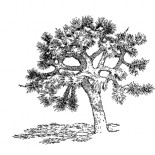
I’m back from a wonderful vacation with Reanna and my family in Joshua Tree and hunkering down for my winter term. I’ve heard that my last term had the most intense workload of the program, but now that I’ve compiled the list of reading and assignments, I wonder if that’s true, especially considering that we have our comp exams the first week of spring term, which includes writing four 6-8 page papers from memory. I’m thinking of ways to take it easier on myself this term because I lost some of my near-focus vision during fall term and I’m not cool with that. (Yes, I was taking breaks, looking up frequently etc. Reading 30 hours a week is reading 30 hours a week.) Anyway, here’s my reading and writing list for the next 10 weeks. The number codes are for the classes: 610 is my second Family Models class, 620 is my Psychopathology (read DSM and deconstruction of such) class, 621 is Professional and Ethical Issues in Family Therapy, and 632 is Medical Family Therapy. I’m excited about all of them.

620 “Remembering Masturbatory Insanity” (URL) 1/6/2010

620 “Mental Disorders are Not Diseases” (URL) 1/6/2010

620 “The Myth of the Reliability of DSM” (URL) 1/6/2010

620 “On Being Sane in Insane Places” (Blackboard) 1/6/2010

620 “Patient Autobiographies” (Blackboard) 1/6/2010

621 Corey ch 1 1/11/2010

621 Corey ch 2 1/11/2010

621 Woody ch 1 1/11/2010

621 reflection paper 1 1/11/2010

610 Nichols ch 6 1/13/2010

610 Nichols ch 9 1/13/2010

610 BB Bobrow & Ray 1/13/2010

620 Munson: Look at Visuals section. 1/13/2010

620 Munson: Read: Introduction, 1/13/2010

620 Munson: Ch. 3 (for overview), 1/13/2010

620 Munson: Ch. 4 (focus on structure of multiaxial system). 1/13/2010

620 Munson: Skim Ch. 21 1/13/2010

620 Munson: Skim Ch. 23 1/13/2010

620 DSM: Introduction, Use of the Manual, Multiaxial Assessment (through p. 37) 1/13/2010

620 Skim “APA Guidelines for Providers…” 1/13/2010

620 D’Avanzo & Geissler: Read Foreword 1/13/2010

620 D’Avanzo & Geissler: Preface 1/13/2010

620 D’Avanzo & Geissler: Appendix 1/13/2010

620 D’Avanzo & Geissler: look at index. 1/13/2010

620 D’Avanzo & Geissler: Look up people of your ethnic heritage, country(s) of origin, or with whose culture you are familiar in order to evaluate strengths and limitations of this resource 1/13/2010

632 Sapolsky ch 1 1/15/2010

632 Sapolsky ch 12 1/15/2010

632 Sapolsky ch 16 1/15/2010

632 Medical Family Therapy ch 3 1/15/2010

632 Medical Family Therapy ch 6 1/15/2010

610 BB Shields & McDaniel 1/20/2010

610 Tomm part 2 1/20/2010

610 reflection paper 1 1/20/2010

620 Munson: Ch. 19, 11 1/20/2010

620 DSM: Adjustment DOs (p. 679-683), Anxiety DOs (p. 429-484) 1/20/2010

620 Kessler 1/20/2010

620 Barrett 1/20/2010

620 Ung 1/20/2010

620 Burroughs 1/20/2010

620 Munson 14 1/20/2010

620 DSM: Dissociative DOs (p. 519-33), 1/20/2010

620 DSM: Eating DOs (p. 583-595) 1/20/2010

620 Schreiber 1/20/2010

620 Knapp 1/20/2010

632 Rolland part I 1/22/2010

632 Rolland part II 1/22/2010

621 Corey ch 3 1/25/2010

621 Corey ch 4 1/25/2010

621 Woody ch 8 1/25/2010

621 reflection paper 2 1/25/2010

621 reflection paper 3 1/25/2010

610 BB Tomm part 1 1/27/2010

620 Munson: Ch. 10 1/27/2010

620 DSM Bipolar DOs (p. 382-401) 1/27/2010

620 DSM: Mood DOs (p. 345-382 1/27/2010

620 Styron 1/27/2010

620 Jamison 1/27/2010

632 Rolland part III 1/29/2010

621 Corey ch 5 2/1/2010

610 Nichols ch 13 2/3/2010

610 BB carr 1998 2/3/2010

620 reading to be assigned 2/3/2010

620 quiz 2/3/2010

620 summary of small group discussion 2/3/2010

632 Gawande 2/5/2010

632 Patients from different cultures ch 2 2/5/2010

632 Patients from Different cultures ch 4 2/5/2010

621 Corey ch 6 2/8/2010

621 Woody ch 7 2/8/2010

621 reflection paper 4 2/8/2010

621 professional disclosure statement 2/8/2010

610 BB Gergen 1985 2/10/2010

610 quiz 1 2/10/2010

620 Munson 9 2/10/2010

620 Munson 16 2/10/2010

620 DSM: Schizophrenic spectrum DOs (p. 297-338) 2/10/2010

620 Alda mother 2/10/2010

620 Love mother 2/10/2010

620 Steele 2/10/2010

620 Hunt 2/10/2010

620 “lobotomies” coleman 2/10/2010

620 Dully and Fleming 2/10/2010

620 El-Hai 2/10/2010

620 Grand Rounds 2/10/2010

632 Shared experience ch 1 2/12/2010

632 Shared experience ch 14 2/12/2010

632 Shared experience ch 15 2/12/2010

632 Medical family therapy ch 4 2/12/2010

632 Medical family therapy ch 11 2/12/2010

632 Sherret 2/12/2010

632 health genogram due 2/12/2010

621Corey ch 7 2/15/2010

621 Woody ch 3 2/15/2010

621 reflection paper 5 2/15/2010

610 Nichols 12 2/17/2010

610 BB Molnar & DeShazer 1987 2/17/2010

620 Munson 20 2/17/2010

620 Munson 16 2/17/2010

620 DSM: Personality DOs (p. 685-729) 2/17/2010

620 Wurtzel 2/17/2010

620 Levine 2/17/2010

620 Miller 2/17/2010

620 Crimmins 2/17/2010

620 DSM: Alzheimer’s (p. 147-158) 2/17/2010

632 psychotherapist’s guide to psychoparmacology 2/19/2010

621 Corey ch 8 2/22/2010

621 Corey ch 9 2/22/2010

621 Woody ch 4 2/22/2010

621 reflection paper 6 2/22/2010

610 reflection 2 2/24/2010

620 review readings 2/24/2010

620 Exam 2/25/2010

632 LBL chapter 1 2/26/2010

632 LBL chapter 3 2/26/2010

632 LBL chapter 7 2/26/2010

632 Candib 2/26/2010

621 Corey ch 11 3/1/2010

621 Corey ch 12 3/1/2010

621 reflection paper 7 3/1/2010

621 legal statutes and rules summary 3/1/2010

610 Nichols 11 3/3/2010

610 BB Goldner 1992 or so 3/3/2010

610 OSCR reflection 3/3/2010

620 trans readings TBA 3/3/2010

632 LBL chapter 8 3/5/2010

632 LBL chapter 9 3/5/2010

632 Becvar 3/5/2010

621 Corey ch 10 3/8/2010

621 Corey ch 13 3/8/2010

621 reflection paper 8 3/8/2010

621 Take home final due 3/8/2010

610 Nichols 14 3/10/2010

610 quiz 2 3/10/2010

632 interview project due 3/12/2010

610 final paper due 10 am 3/15/2010